12 — 16.05.2026
Orian Barki, Meriem Bennani New York
Bouchra
film
 | Arabic, French, English → NL, FR, EN | ⧖ 1h20 | €10/ €7 | Wheelchair accessible, no accessible toilets
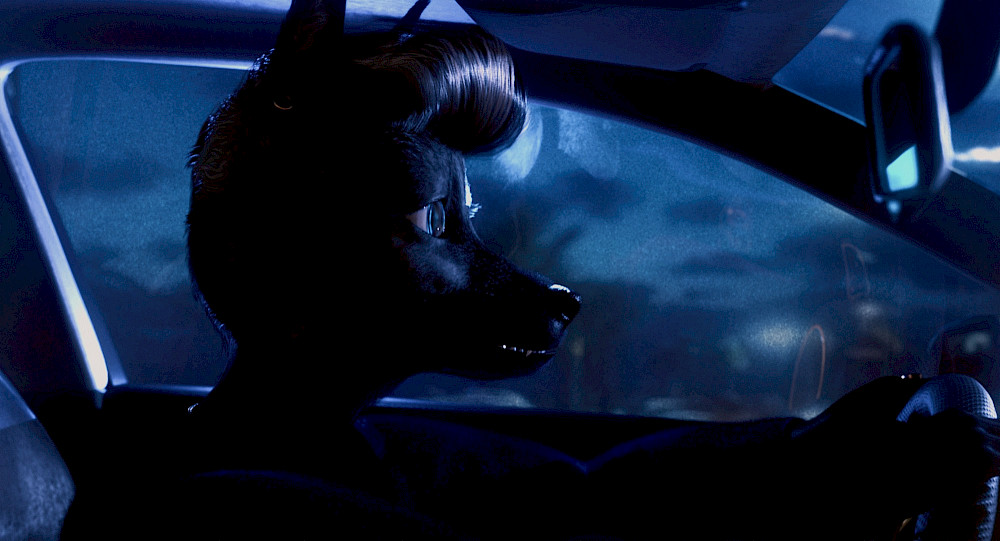
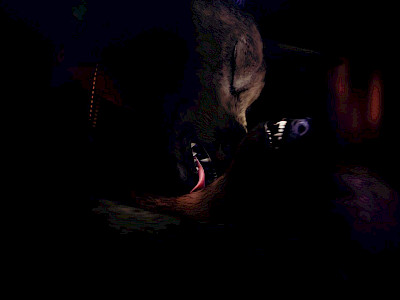
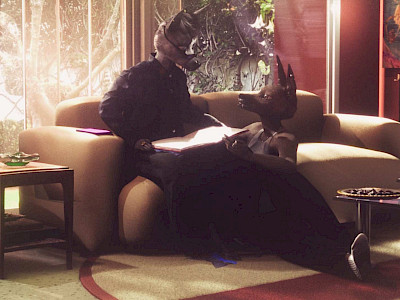
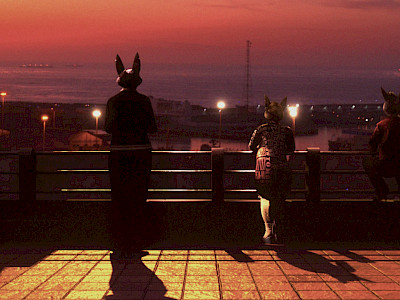
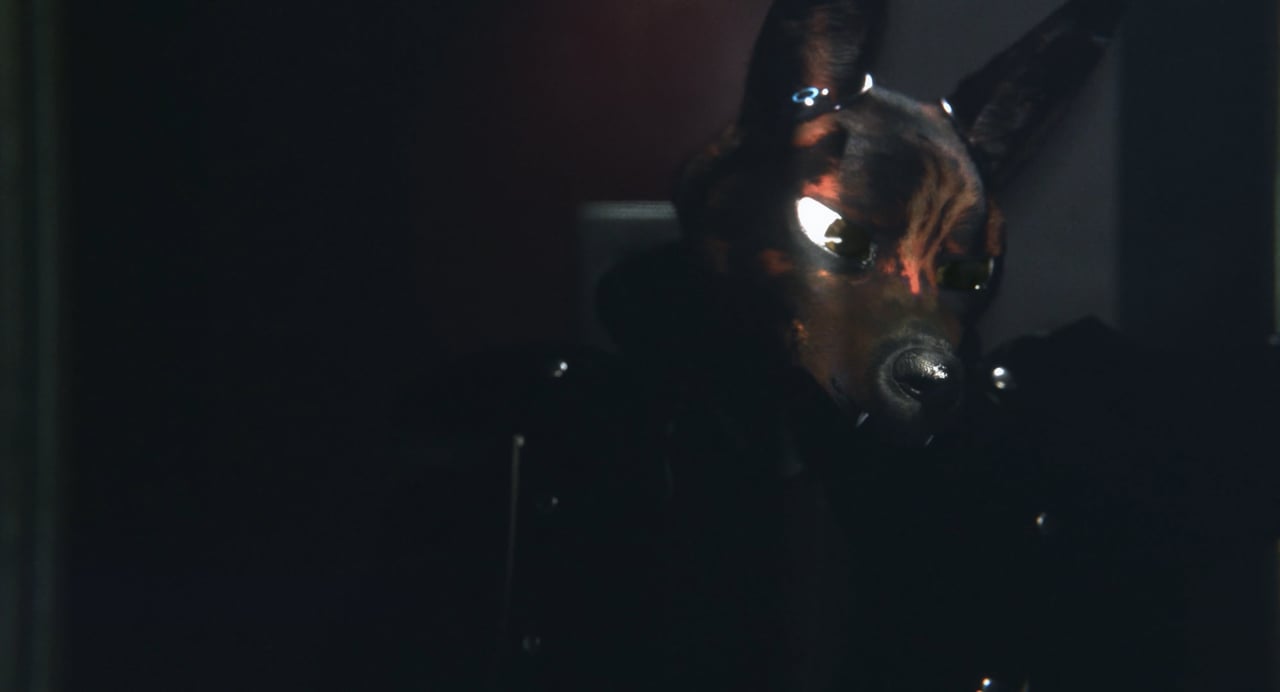
Bouchra is a jackal living in New York, where she works as a filmmaker. She navigates a life involving an ex-girlfriend, her parents and aunts in Casablanca, and the unexpected pull of a new fling with a bear. As she works on a film, Bouchra returns to the tender fault line between herself and her mother, Aicha, a cardiologist whose steady love is bruised by the silence that followed Bouchra’s coming out.
This semi-autobiographical story is a marvel, written by visual artist Meriem Bennani, Orian Barki and Ayla Mrabet. The film is based on conversations Bennani recorded with her family and friends in Morocco. Voices captured in cars, kitchens, and on phone calls are recreated by animated creatures whose softness allows difficult truths to slip through.
In Barki and Bennani’s unique aesthetic, the playful world of animal-like characters mingles with documentary honesty. Fiction becomes a journey toward maternal recognition and the search for a language of queerness; daughterhood a negotiation between duty and desire; storytelling a fragile attempt to repair what distance has frayed. In one of the most remarkable moving-image works of 2025, Bouchra opens a luminous space where a family cautiously begins to speak again.
Q&A with Orian Barki & Meriem Bennani
How does Bouchra relate to your previous works together, especially 2 Lizards?
Meriem Bennani – Bouchra uses a similar principle as 2 Lizards: 3D anthropomorphic animals with live action backgrounds. The production value of Bouchra is significantly higher thanks to the incredible work of cinematographer John Michael Boling and head of animation Jason Coombs. Working with them allowed us to develop a look that had some of the things we liked from our previous work, but with a more cinematic approach that can sustain a longer narrative.
Orian Barki – 2 Lizards was a diaristic film and so is Bouchra. It has our tone, which I would describe as romantic and witty, but Bouchra is darker and more melancholic. 2 Lizards was one of the most fun projects I ever worked on. We felt so inspired, free, and playful. Making Bouchra, on the other hand, was a lot more delicate because we were working with a very precious and personal subject. We wanted to make sure we got it right. Our way of getting it right was by sticking to the nuances.
What perspective does your practice as visual artists give you when working with cinema, particularly animation?
MB – I think not working within the traditional “film industry” got us used to producing videos quickly and making up our own rules. Orian is a documentary filmmaker who does everything from the filming to the editing, while I’m an artist working across very different formats and mediums. This freedom is particularly unique in the field of animation, which is so labor intensive and expensive that it often requires super rigid pipelines and methodologies. Of course, we had to follow some rules to complete a narrative feature with a small team and survive the mountains of work, but we also were able to continuously rewrite the story and make major changes until we felt the film found its tone. These changes would have been impossible within a traditional animation pipeline.
OB – My perspective was: how do we bring spontaneity to this rigid medium of animation? How do we keep it flexible? With conversational dialog? How can we decide on things as we go? When we made 2 Lizards, we could work spontaneously because it was just the two of us and the episodes were short, about two to five minutes long. With Bouchra, we maintain this spontaneity by keeping the team small and all being in charge of multiple pipelines. For example, Meriem and I both edit, direct, and voice the characters, so we can record a scene, edit it with drawings as storyboards, and then re-record and develop the story as we went. This process doesn’t require booking a recording studio, coordinating with actors, sending it to the editor, and all of that. And eventually even the drawings I made as storyboards ended up in the movie!
Why did you choose to tell this story with this style of animation, with your characters as animals?
MB – We had the style of animation and the animals before the story, in a way. With 2 Lizards we realized that we found a tone and a style for telling stories: the raw and naturalistic dialogue of documentary contrasting with the instantly symbolic potency of speaking animals. We wanted to see how this would translate into a longer story; that was the starting point. Animation also happened to be a great medium to create both a closeness and a distance with Bouchra as she navigates multiple worlds, languages and situations. John Michael Boling and Jason Coombs also made the style and look what it is with their completely original take on animation and their hacking of Blender software as an artistic tool.
OB – Bouchra is a people pleaser, always contained, but she carries intense emotions and rage in her. So we thought a coyote would portray that tension well. It’s a wild animal that looks domesticated. It was also a small shout out to Legoshi, the wolf from the anime series Beastars.
What are the biggest influences on your visual style?
MB – For me, it’s things I see on a daily basis: early American cartoons, the world of Chaabi and Rai music, and lots of movies. I was also a huge fan of Culturesport, John Michael and Jason’s animation project.
OB – When working on Bouchra, John Michael told me I should watch Chungking Express by Wong Kar-Wai. It became a visual inspiration for a lot of the shots.
What made you both want to turn your experiences into a film like Bouchra?
MB – We both have worked mostly on documentaries or with non-actors playing themselves, so bringing our lives into a film felt like a natural impulse. Bouchra started as scripted fiction. Only a year into production did we bring in the reality element of the phone calls with my mom as a meta-narrative. Nothing we had written felt as nuanced and strong as these conversations.
OB – Since l’ve known Meriem she’s been making work inspired by her family and her home. Her mom stars in a lot of her films, but never as herself. I had a feeling that one day she would want to make a film about their relationship. l’m honored that she trusted me with this story.
What challenges did you encounter telling such a personal story, involving your own friends and families?
MB – Outside of the obvious sensitivities, I would say that the hardest part is being able to “work”. In many instances I wasn’t able to tell if some scenes were super interesting or super banal because of the lack of distance. This is where I would let Orian lead and trust her great story instincts.
OB – Finding the balance between wanting to push the story and listening to Meriem’s boundaries was important. Even though I’ve known Meriem intimately for many years and am familiar with her relationship with her mom, I am an outsider to the culture and language of where the story takes place. I wanted to be mindful and learn a lot before suggesting my ideas about the story. For Meriem, the most important thing was to avoid creating binary characters who were “bad” or “good”. To avoid catering to Western audiences that would watch the film and think: “Oh, it’s so hard to be queer in Morocco.” Sometimes it felt to me like she was being very protective of all the characters and was avoiding conflict. Those were the moments where I wondered how much to push. Eventually, developing the story became about being creative about conflict. How can we tell an engaging story that carries tension without relying on conflict and resolution so much? How can we portray the love, tenderness, and care in these relationships alongside the distance and silence between them?
Presentation: Kunstenfestivaldesarts, Cinema Galeries
Directed by: Orian Barki & Meriem Bennani | Cinematography: John Michael Boling | Head of animation: Jason Coombs | Original script: Orian Barki, Meriem Bennani, Ayla Mrabet | Produced by: Fondazione Prada | Creative producers: John Michael Boling, Jason Coombs | Executive producers: Orian Barki, Meriem Bennani, Hi Production, Cecile Winckler, Octavia Peissel, Ella Bishop, Pau Suris | Score: Flavien Berger | Original song: ZSELA, Flavien Berger | Music supervision: Randall Poster, Milena Erke