06 — 08.05, 10 — 15.05, 17 — 22.05, 24 — 28.05.2016
Apichatpong Weerasethakul Chiang Mai
Memorandum
exhibition — premiere
€ 5 / € 3 | Free admission with Fever Room ticket
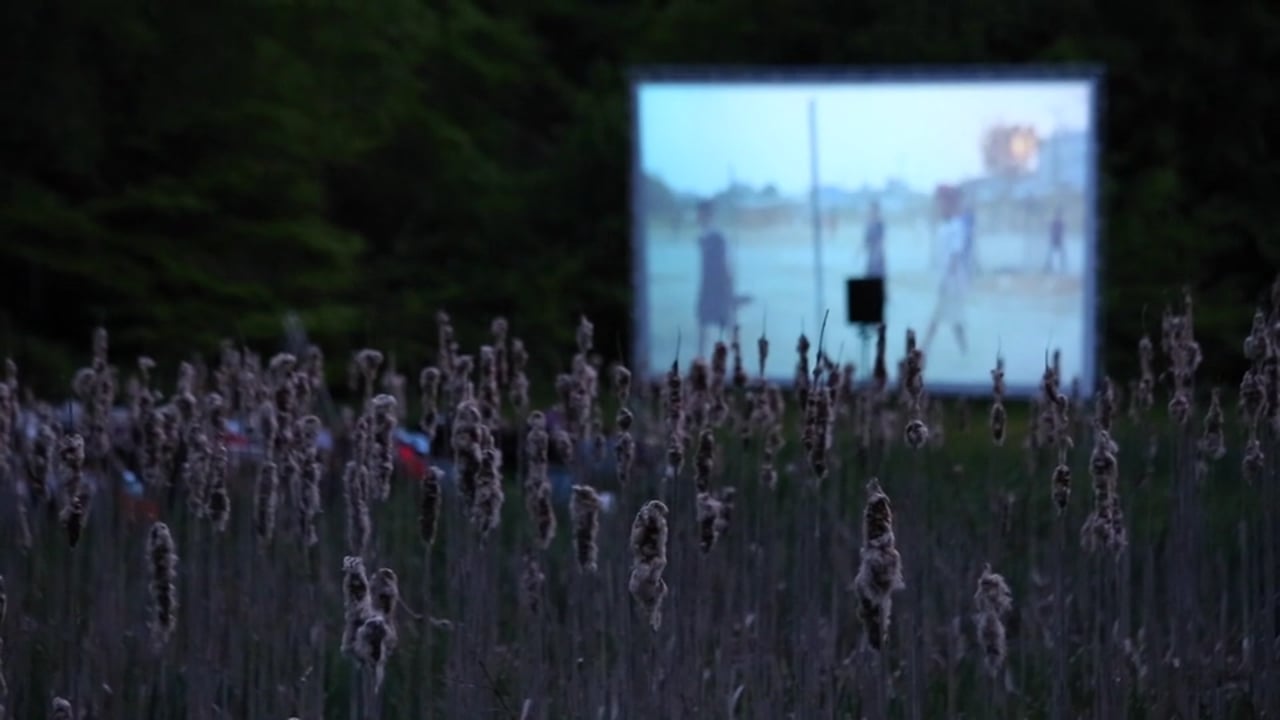
In collaboration with Cinema Galeries, the Kunstenfestivaldesarts presents a focus programme on the works of Apichatpong Weerasethakul, a filmmaker and visual artist from Thailand and a key figure in 21st-century cinema. Weerasethakul has become known for his subdued and contemplative films, which have already won him many prizes. Memory and desire wander round like ghosts in his work. Transcending the boundaries of cinema, he makes fictional films and experimental documentaries as well as photos and video installations. Weerasethakul has an extraordinary feel for mystery and inertia. He relates realism to science fiction, modern to primitive, everyday life to Buddhist meditations. Memorandum is an attempt to display Weerasethakul’s course of work in all its facets. It consists of a retrospective of his short and feature films, and an exhibition of his video installations. An excellent opportunity to discover the work of this idiosyncratic artist. Do not miss it.
See also
Fever Room
Tropical Malady
Master class
About Fever Room
Interview with Apichatpong Weerasethakul
A memorandum assists the memory by recording events or observations on a topic. What would this exhibition be a memorandum of?
Over the years my films have become my memory bank, partly because I’m not good at remembering. Often there are places, people, colours – with no other agendas. It’s also a journey into my homeland’s history.
This selection of videos and installations seems to be an example of how your more recent work has been more closely associated with your home country.
They’re always personal. I’m continually fascinated by Thailand with its layers of narratives, beauty and troubles. I found myself change through the act of recording, especially in recent years since the political situation here has taken a turn for the worse. I’m concerned about our obsession with nationalism, righteousness and spiritualism. They’ve encroached on people’s basic rights. I hope that Memorandum reflects some aspects of this journey. It’s impossible to present all the installations, but I’ve picked a diverse selection of lights, from the first video 17 years ago to fairly recent ones. To me, they match the subterranean, intimate feel of the Galeries.
In an article you wrote for Les Cahiers du cinéma this year, you mentioned the importance of ghosts in our everyday lives. In this exhibition it seems that they’re really bound up with your own life.
Yes, various kinds of ghosts have come and gone. Somehow making a film is a kind of exorcism. There were phantoms from childhood tales and television shows and there were other ones from political violence. Fact and fiction are intertwined and at a certain point don’t matter.
Sleep also seems to take on new importance in your work, from Teem (2007) to Dilbar (2013) and Cemetery of Splendour (2015).
For me, sleep is like going to the cinema. There are various scenarios that we experience at night more than from actual movies. And they’re the most relevant to us because they are from us, from our memories. I focus on sleeping and dreaming as a tool to evade reality, to find a different world or idealism. There’s definitely a political angle to it.
There will be four programmes of short films during the retrospective. How do you choose how we should experience your work?
Take your time and let them flow into you without analysing. I don’t make films that logically, but more emotionally. Sometimes the terms ‘shorts’ and ‘installations’ are interchangeable. It’s better to just treat them as ‘light’.
How has your work evolved from your first installations, like Windows (1999), up to this exhibition, especially now that you’ve added a new layer to your work with the live performance?
It’s amazing that I don’t feel that my practice has changed that much. Certainly I’ve become more aware of my country’s history, but the way I film and experiment are the same. Even the performance is basically another kind of cinema. If I have to come up with a difference, I think that when I started out I placed quite a lot of emphasis on forms. But lately I feel less restricted in finding new voices. I think it’s best just to listen to your own rhythm and translate it like a child would do.
Edouard Meier,
February 2016
A retrospective of works by
Apichatpong Weerasethakul
Assistant
Sompot Chidgasornpongse
Administration
Stephanie Hermant
Producer exhibition
Henri Dekoster, Chaisiri Jiwarangsan
Communication
Robine Petit, Lara Abdessalem
Projections
Deniz Erdem
Presentation
Kunstenfestivaldesarts, Cinema Galeries
Production
Kick The Machine Films
Supported by
Brussels Hoofdstedelijk Gewest/Région de Bruxelles Capitale, Stad Brussel/Ville de Bruxelles, Thalys, Hotel Marivaux, Géné-Electra, Nationale Loterij/Loterie Nationale