14 — 17.05.2026
Michael Disanka Mbanza Ngungu-Kinshasa
Je suis l’acteur de la poésie de ma mère
theatre — premiere

 | French → NL, EN | ⧖ 1h40 | €20 / €16
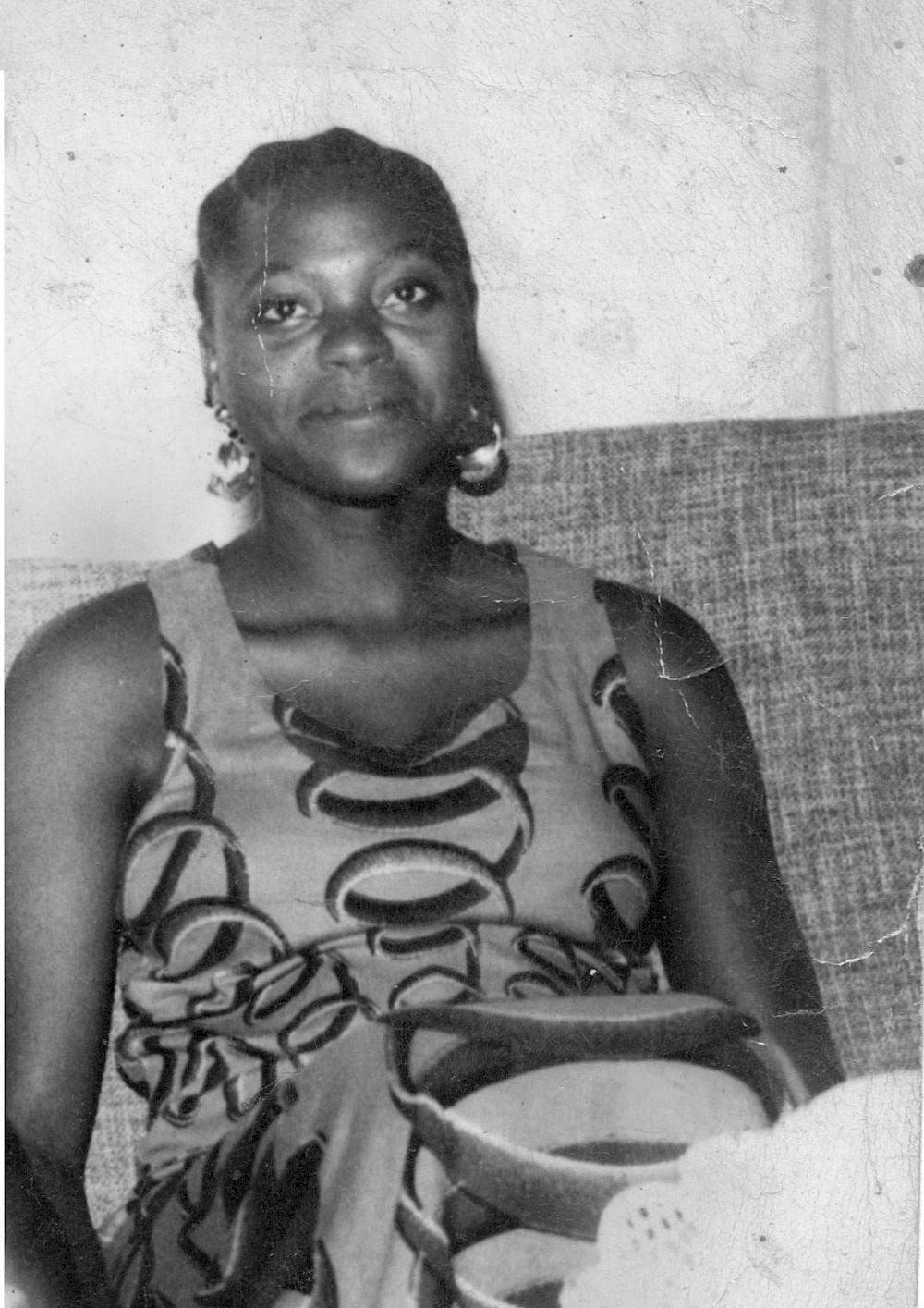
Michael Disanka’s work is rooted in an intimate heritage: poetry and a love of writing passed down to him by his mother. This new creation pays tribute to her by linking her story to that of the Congo and drawing on kasàlà, a poem of praise from the Kasai culture to which she belonged.
In the art of kasàlà, access to a form of truth requires rotating one’s tongue 77 times. Disanka commits to this: he composes a scenic poem that intertwines his flow of words with a sonic curve; a polyphony woven with sounds recorded in his mother’s village, the history of which was marked by the South Kasai war of secession and its central figure Albert Kalonji. He initially received only a short song about this from his mother—a lullaby linked to a massacre whose meaning he would only come to understand later.
The stories that run through Disanka make his body vibrate, yet he remains motionless in space, the vessel of a story that takes root on stage. An intimate dialogue between a son and his mother becomes a quest to reconstruct a hidden story and reimagine its transmission—to the audience, perhaps, or to his own son. Je suis l'acteur de la poésie de ma mère is the artist’s first solo work, the final part of a trilogy in which he blends his personal history with that of the Congo. A poetic whirlwind dedicated to mourning and memory.
I Am the Actor of My Mother’s Poetry
“If history is not passed down, we must go and seek it out; if we cannot find it, perhaps we must invent it…”
Note on the creation of the piece
29 December 2024
Mbuji-Mayi/Kasaï
Oh holy mother, here is your tribute, this memorial play, ready to take to the stage. In this theatre-world from which I celebrate you today, I extinguish the devil, who, lurking in the dark corners of the smallest detail, has led me up the garden path for so many years. After these three years of relentless quest, which have left fractures and indelible marks, my act is finally set free; my words, wrapped in your poetry, celebrate you here below. You’re dancing up there. Your remains, buried as they are, exalt life, lifting me just as high. I celebrate you here below, there’s singing up there; love in eternity is spoken, and the stammerer speaks!
“I am the smuggler of a story that I discover at the same time as passing it on. My uncle Norbert Mpoyi maps out the city for us with words. He tries to remember; we get lost with him, and as we lose our way, he guides us, and together we piece together a shared memory.”
Note on the creation of the piece
29 December 2024
Mbuji-Mayi/Kasaï
When my mother died, one of my uncles, Norbert Mpoyi, told me the story of their childhood home, which had been occupied by the South Kasai secessionists. I discovered a story that had left a deep mark on their childhood, and yet mum had never mentioned a word of it to us. From that moment of delayed mourning, of deep sorrow and reflection, I began a quest to uncover this missing part of our shared history; a quest that started in Mbanza-Ngungu, where I had relocated my company, and led all the way to Kabeya Kamuanga, the place where the grand history of the Congo intersects with that of my family.
“I have created a space where mourning and tribute are possible. Je suis l’acteur de la poésie de ma mère is a poetic cry in the style of the Kasala, blending half-sung recitations with a journey into the history of the Congo in the 1960s, following in my mother’s footsteps.”
Note on the creation of the piece
25 January 2026
Kinshasa
The Kasala is a performative literary genre whose purpose is to glorify a person or a tribe, to inspire courage in warriors, and to sing the praises of heroes and heroines. It is no ordinary song, but rather one that evokes an individual’s past, whilst at the same time retracing the stages through which they came into this mortal world. It is a song that recounts the great deeds of a clan, a tribe, a lineage, to commemorate according to the circumstances (mourning or celebration) and to send the individual back to their origins, reminding them that we are not only ourselves, that our body is as ancient as the origin of the world, that it carries within it the essence of our ancestors, that we have already been in the body of so-and-so, or of such-and-such, as far back as we can trace the family tree of the lineage.
“This is the third part of an open-ended trilogy that began with Sept Mouvements Congo (2018) and Géométrie de vies (2022), exploring our personal histories, the contemporary history of the Congo, and the experience of being an artist living and working in the DRC. So what part of the Congo’s history is connected to my mother, the source of my own history?”
This, then, is the story of a mother and a son; it is the story of a family and a people; it is the story of a land with a past as glorious as it is turbulent, a chaotic present, and a future as bright as it is uncertain; it is the story of the Congo. Our parents did not tell us the story of the massacres in their native Kasai, including that of Bonzola, which the United Nations Secretary-General Dag Hammarskjöld described as genocide against the Muluba people. It was war; everyone was fighting for their survival. After each massacre, they sang of their future vengeance and their allegiance to the secessionists. Song became a conduit for rage and resentment, but also a symbol of pride and of belonging to a community. This cycle of violence later led to the murder of Lumumbists, shortly after the assassination of Patrice Lumumba himself and his key allies Maurice Mpolo and Joseph Okito in Katanga. A song that spans generations becomes an archive that carries within it the seeds of that wind of horror that swept across the entire region.
“My mother is present in every poetic essence of my literary voice. So how to erase myself, let someone else appear who is actually the source of everything: my life, my poetry, the creator that lies within me… so that I may rediscover myself through a transformation that reflects the essence of what I have received from her. I must therefore erase myself to allow other bodies to appear through my own, on stage, and let other voices be heard through the magic of poetry. What kind of acting approach would bring this sort of theatricality to the fore?”
Note on the creation of the piece
30 April 2023
Poem by Marguerite Disanka
Heart in my hands
Rooted in my heritage
Facing the void
I call out to myself
My heart is pounding
It’s pounding hard, and harder still
Harder and harder still
Like an engine starting up
It resonates within me
Resonates through my very being
Thought, formed; form and thought
That draw me in
My spirit connects
To the sounds of its heart
And the waves in its depths
Multicoloured ripples
The breath, breathes
Coming from the depths
Spreads out in sparkling bursts
Right down to the roots, the whole plant bed
I become myself
The nice, gentle fire
Shining without going out
Nor burning others
Oh! I am nothing but fire
I love being this fire
I shall remain this fire
Which does not burn, but illuminates
- Translations by Jodie Hruby
- Michael Disanka
Presentation: Kunstenfestivaldesarts, KVS
Text, direction and actor: Michael Disanka | In dialogue with: Christiana Tabaro, Laetitia Ajanohun, Adeline Rosenstein | Collaboration on music and singing: Franck Moka, Kady Vital Mavakala, Cedric Fundi dit Mumba Yachi, Arnold Asende dit Croco perc, Taluyobisa Luheho | Video: Franck Moka | Scenography: Lukas Stuki | Light design: Cléo Konongo | Thanks to: Norbert Mpoyi Cilombo, Chorale Pierre Angulaire, Les mamans de Kabeya-Kamuanga | Production manager Congo: Theresia Tshilanda | Dutch translation and surtitling: Inge Floré | English translation: Trevor Perri | Light: Ellie Bryce | Sound: Noé Dervaux | Stage manager: Carlo Borguignon | Production manager: Lise Bruynseels | Distribution: Cecilia Kuska, Inge Jooris
Production: KVS | Coproduction: Perpodium, La Compagnie Michael Disanka-Théâtre du Scratching, Théâtre L'Aire Libre, Institut français de Kinshasa, Festival d'Automne à Paris
With the support of the Tax Shelter of the Belgian Federal Government and the Institut français de Paris & Pôle Eunic RDC